The Decline of the Turtle Dove
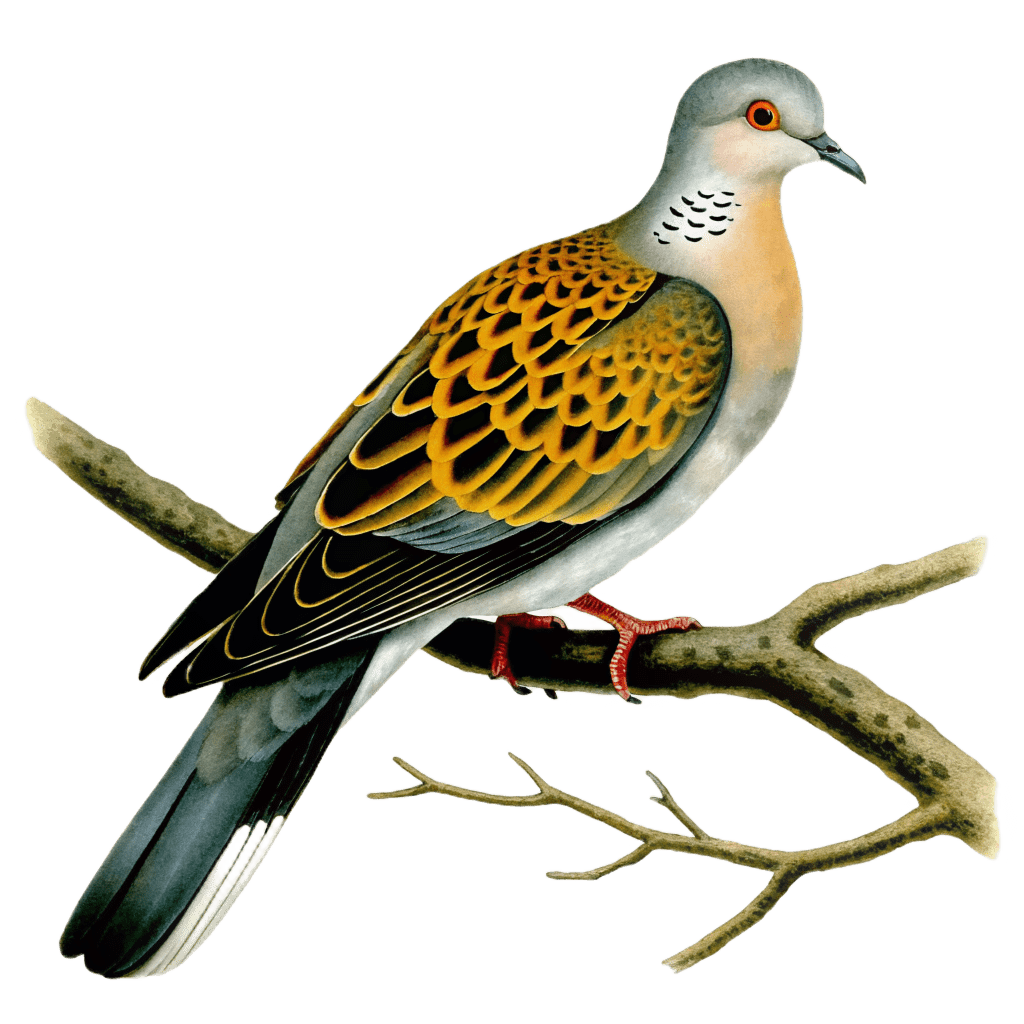
The turtle dove, once a common sight and sound of the British countryside, has experienced one of the most dramatic population declines of any UK bird species. This visualisation shows data from the Breeding Bird Survey tracking turtle dove populations from 1994 to 2025.
A catastrophic decline
The numbers tell a stark story. From a population index of 94.52 in 1994, turtle dove numbers have plummeted to just 1.82 in 2025 — a decline of more than 98% in just over three decades.
The decline has been particularly steep since the mid-2000s. The population roughly halved between 1994 and 2005, then halved again by 2011. By 2015, the index had fallen below 6, and it has remained below 3 since 2020.
What's causing the decline?
Multiple factors have contributed to the turtle dove's dramatic decline:
- Habitat loss: Changes in farming practices have reduced the availability of weed seeds and nesting sites
- Food scarcity: Modern herbicides have drastically reduced the wild plant seeds that turtle doves depend on
- Migration challenges: As a long-distance migrant, turtle doves face threats throughout their journey to and from sub-Saharan Africa
- Hunting pressure: Hunting during migration, particularly in Mediterranean countries, continues to take a toll
Conservation status
The turtle dove is now red-listed in the UK as a species of highest conservation concern. Conservation efforts include:
- Agri-environment schemes to provide food-rich habitats
- Research into migration routes and wintering grounds
- International cooperation to reduce hunting pressure
- Breeding programmes and monitoring
Despite these efforts, the trend shows little sign of reversing. The turtle dove serves as a powerful indicator of the broader challenges facing farmland birds and the urgent need for landscape-scale conservation action.
View data table
| Year | Population Index | Lower CI (85%) | Upper CI (85%) |
|---|---|---|---|
| 1994 | 94.52 | 100.00 | 110.55 |
| 1995 | 105.10 | 97.69 | 104.54 |
| 1996 | 95.51 | 93.46 | 98.41 |
| 1997 | 82.24 | 87.79 | 93.02 |
| 1998 | 84.57 | 81.90 | 87.08 |
| 1999 | 75.91 | 75.68 | 80.85 |
| 2000 | 68.45 | 69.45 | 73.98 |
| 2001 | N/A | 63.71 | 68.07 |
| 2002 | 57.13 | 58.67 | 62.84 |
| 2003 | 52.95 | 54.38 | 58.11 |
| 2004 | 51.06 | 50.29 | 53.19 |
| 2005 | 51.46 | 45.37 | 48.40 |
| 2006 | 36.95 | 39.17 | 41.79 |
| 2007 | 31.08 | 32.96 | 35.63 |
| 2008 | 24.90 | 27.66 | 30.06 |
| 2009 | 26.40 | 23.25 | 25.45 |
| 2010 | 20.16 | 18.96 | 20.71 |
| 2011 | 13.22 | 14.89 | 16.39 |
| 2012 | 10.99 | 11.58 | 12.88 |
| 2013 | 9.94 | 9.11 | 10.31 |
| 2014 | 6.74 | 7.34 | 8.49 |
| 2015 | 5.95 | 6.30 | 7.54 |
| 2016 | 4.66 | 5.84 | 7.27 |
| 2017 | 8.33 | 5.60 | 6.94 |
| 2018 | 4.46 | 5.04 | 6.29 |
| 2019 | 4.29 | 4.30 | 5.49 |
| 2020 | N/A | 3.57 | 4.61 |
| 2021 | 2.39 | 2.96 | 3.78 |
| 2022 | 2.63 | 2.55 | 3.30 |
| 2023 | 2.44 | 2.28 | 2.98 |
| 2024 | 2.07 | 2.04 | 2.80 |
| 2025 | 1.82 | 1.81 | 2.71 |
Data source: Breeding Bird Survey (opens in a new tab). The population index is a smoothed trend with 85% confidence intervals shown as the shaded area.